blog intersted of cars news

الخميس، 27 فبراير 2014

Audi .. leader warns of red traffic lights


Confirmed the German car company " Audi " she is going to develop the traffic lights clever inside panels counters cars reveal the driver to the remaining distance to the nearest signal red where will be placed among the timeframe within the painting shows the time remaining until the turn following signal from green to red and vice versa , as the counter last to speed required to access the following reference in the case of green and is equipped with a warning voice when approaching red lights and dashboard new associated with the electronic network of lights signals within cities the company has tested the new technology in a number of major cities such as Berlin , Germany, and Verona , Italy and Las Vegas , United States .

Hennessey Venom hits a record 270.49mph

America’s 1244bhp hypercar has just gone faster than the

Top Gear can exclusively reveal the Hennessey Venom has hit 270.49mph at the Kennedy Space Center, the highest speed ever recorded by a production car.
The 1,244bhp Venom clocked its record-breaking figure in the hands of test pilot Brian Smith on February 14 on Florida's Space Shuttle landing runway. Its run eclipses the v-max of the Bugatti Veyron Super Sport, which clocked 269.86mph on the Ehra-Lessien test track in 2010.
You can watch footage of the run below, but suffice to say the stats are astonishing. According to the official VBox figures, the Venom - powered by a 7.0-litre twin-turbo GM-sourced V8, remember - accelerated from 20mph to 120mph in just 7.71 seconds, pulling a maximum 1.2g of longitudinal acceleration as it went.
Perhaps even more impressive, the Venom went from 120mph to 220mph in a fraction under ten seconds. That's extraordinary acceleration, even for a car that holds the 0-200mph record. Achieving the final 10mph took just ten seconds, a zone Smith described as just a little sketchy.
TG drives the Venom GT prototype
"At the very top end, there was a little wandering, but hey, we're going 270mph!" says the former Michelin tyre test engineer. "It was still pulling. If we could run on an eight-mile oval, we could go faster than that..."
But the Venom didn't have an eight-mile oval with play with, rather a runway that is, by the standards of v-max runs, somewhat on the snug side at just 3.22 miles. The Ehra-Lessien straight measures some 5.5 miles, with curved banking at the end. The Space Center's runway ends in ‘grass and a ditch'.
Which meant Smith had to get hard on the brakes after clocking 270mph. The Venom decelerated from its v-max to 70mph in just under 1000 metres, which might sound a long way but, when you consider it was covering over 120 metres every second at its quickest, is a mighty impressive feat.
However. Despite going quicker than the Veyron Super Sport, the Venom can't call itself the fastest production car in the world, at least not in the eyes of Guinness. See, to qualify for a Guinness speed record, a car must make two runs, one in either direction, with the two top speeds averaged out for the official time.
In 2010, the Veyron SuperSport hit 265.96mph on its upwind leg, and 269.86mph on its downwind leg. Neither figure, as you'll notice, is as rapid as the Venom's 270.49mph. So why didn't Hennessey do another run in the opposite direction? Blame the space dudes.
Venom GT vs SSC Ultimate Aero
"We wanted to run in both directions, but the NASA guys wouldn't let us. Getting into NASA isn't easy. It was a two-year process," company boss John Hennessey told Top Gear. He confirmed the car would have been mechanically fine for a return run, and that the single run didn't take advantage of any significant wind assistance. "The morning was relatively calm, about a 3mph quarter-crosswind. If we'd run in both directions, the result would have been pretty much the same."
Even if the Venom had run in both directions, Hennessey says it couldn't have qualified for a Guinness record. "For whatever reason, Guinness made a decision that to qualify [for a production car world record], you have to build 30 units," John told us. "We're only making 29 Venom GTs. To date we've built and delivered 11."
Like Smith, Hennessey believes the Venom could have gone even faster on a longer runway. "Looking at the rate of acceleration, we're still pulling around 1mph per second at 270mph," he says. "With another mile to run, I believe the car could do 275. Maybe 280..."
Even so, Hennessey is pleased with the result. "Since the inception of the Venom GT, it's been a dream of ours to build the fastest car. There are lots of different definitions, different metrics, but for us, when people talk about being the fastest, it's about being the absolute fastest. So it was a good day. We achieved the goal. No other road car has broken 270mph..."
Despite the inevitable comparisons, Hennessey doesn't see the Venom GT as a Bugatti Veyron competitor. "They're completely different cars," he says. "We aim not just to be the most powerful, but also the lightest. That thing [the Veyron] is a Bentley GT, a comfortable car."
So what next for the Venom? Hennessey says there are no further v-max runs planned, but that the Venom's next targets are track-based. "We'd like to switch gearing, and look at validating performance numbers on some well-known race circuits around the world."
Including the Top Gear test track? Yes, says Hennessey. "I think we could be the fastest at Dunsfold. We could go into the very low teens [i.e. a lap time somewhere around 1m13s] with Stig in the driving seat. That would be a bigger validation than breaking 270mph..."

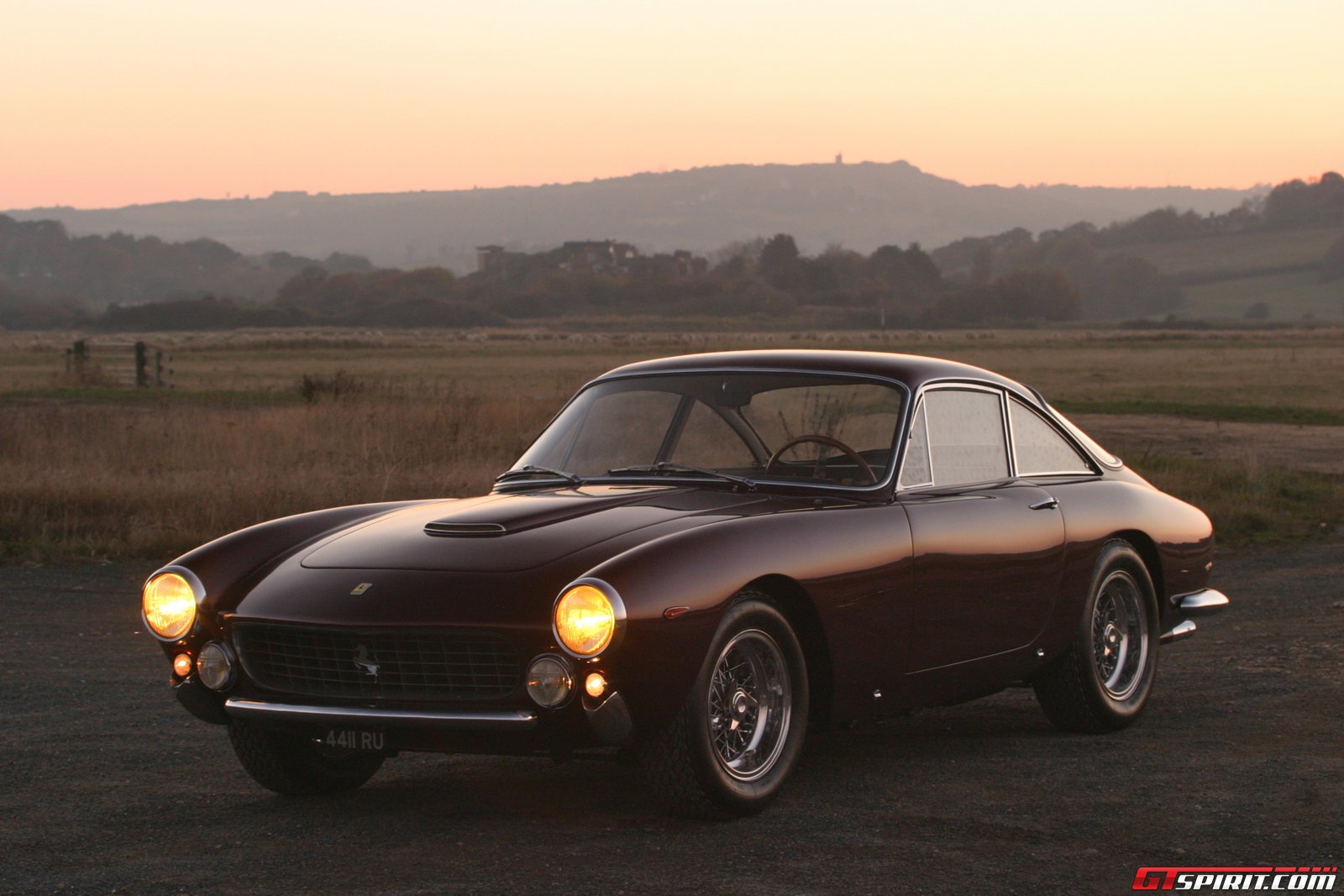
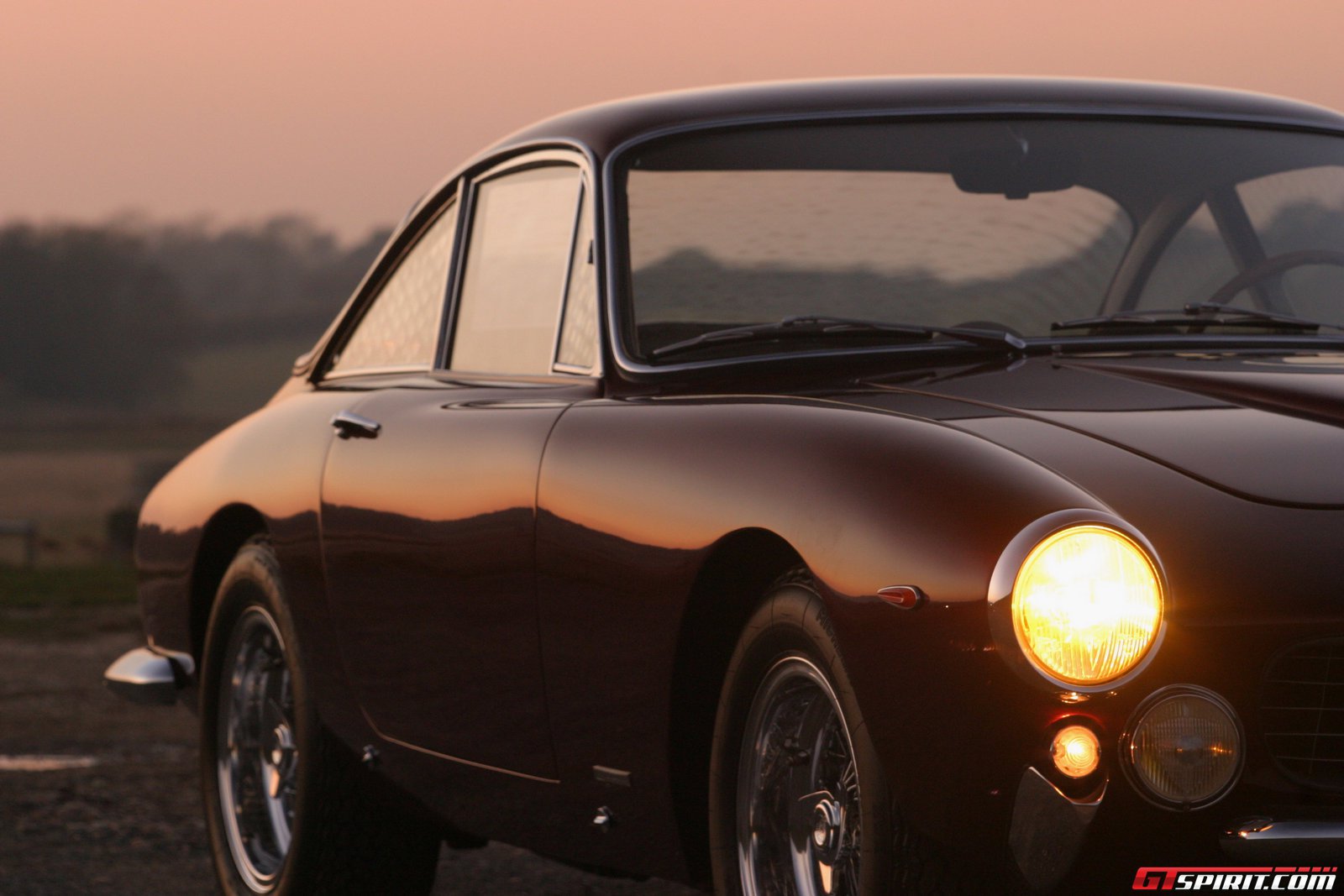
Road Test: 1963 Ferrari 250 GT Lusso


In the early 1960s, while the Beatles and Cliff Richard were topping the charts in Britain, and Elvis was threatening to become America’s best-known export, Ferrari were crafting some of the most beautiful cars ever to turn a wheel.
The Ferrari 250 came in many guises and became the generic term for a whole range of Ferrari Grand Touring cars. With 15 different models spanning the years 1953 to 1963, the 250 Series encompassed a decade of elegant sports cars designed for both road and track.
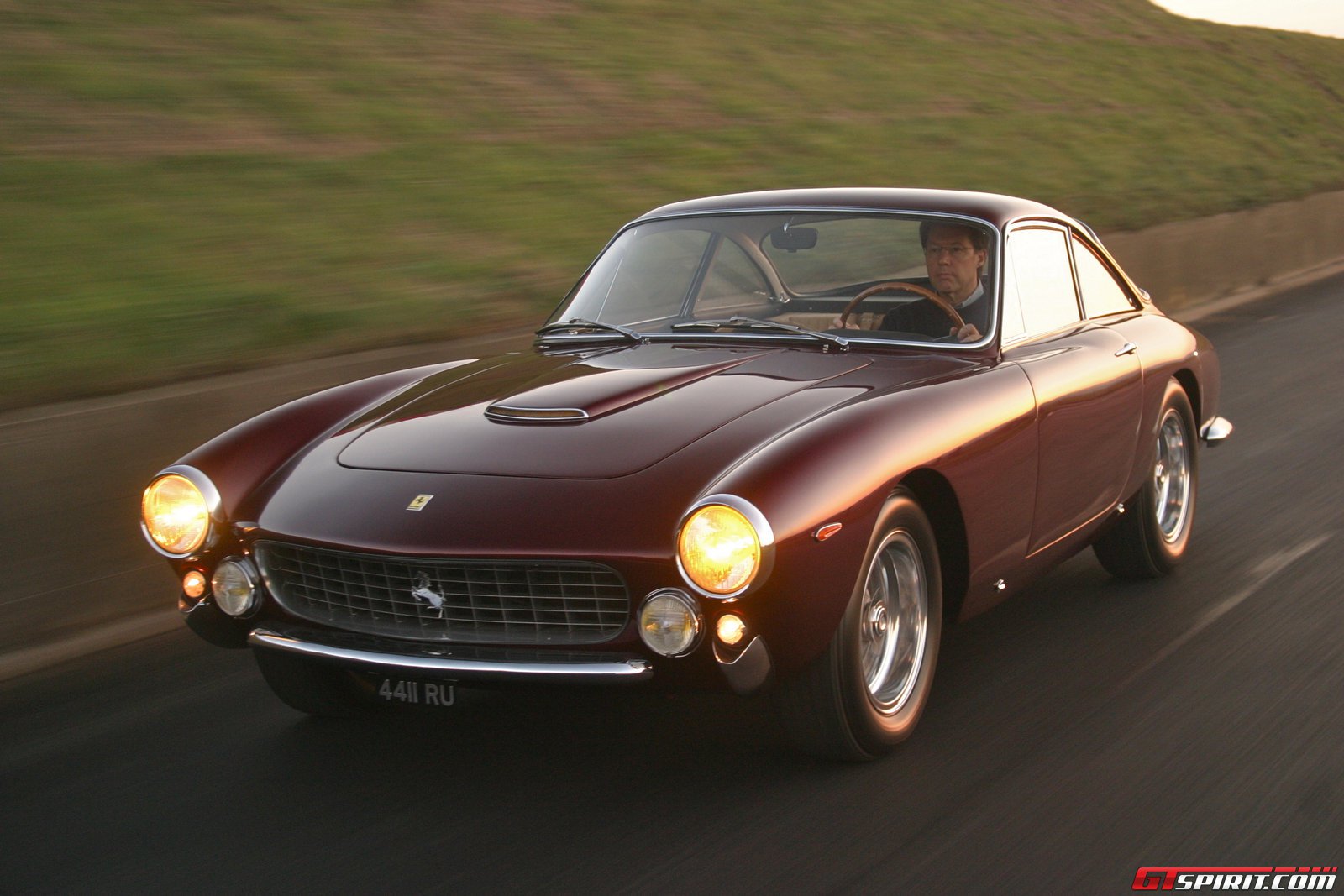
In a history spanning just over half a century, Ferrari has produced cars with a wide range of styling from beautiful and elegant to purposeful and even brutal. The most famous of the 250 series cars are undoubtedly the 250GT SWB and the incredible 250GTO, both racing legends and purposeful looking with it. But amongst the road cars the 250GT Lusso has the most beautiful lines of all, and is arguably the most elegant road going Ferrari of all time.

This is of course a subjective judgement, a gut reaction to a design that looks right from every angle. But in design, what looks right normally is, and when you stand back and consider the Lusso’s styling objectively, it becomes apparent that its basic proportions obey all the fundamental rules of good design.
At the core of this ‘rightness’ in proportion is the long front, which conveys a sense of power and speed, while the rear tapers to a Kamm tail, the aerodynamically most efficient way to finish a car. In between, the proportion of roof to body and its shape and position in relation to the wheelbase is also visual perfection.
The slim roof pillars and glasshouse create a feeling of light and space both inside and out, resulting in a car that appears powerful yet graceful. This is exactly the sort of look that made the Superm


If the Lusso looks like a simple shape at first glance, the way its body panels are formed in 3D belies that simplicity. The wings and door panels feature complex compound curves, a panel beaters nightmare, and in plan view, the Lusso tapers gently towards each extremity. If it were a living, breathing thing, it would surely be a dolphin!
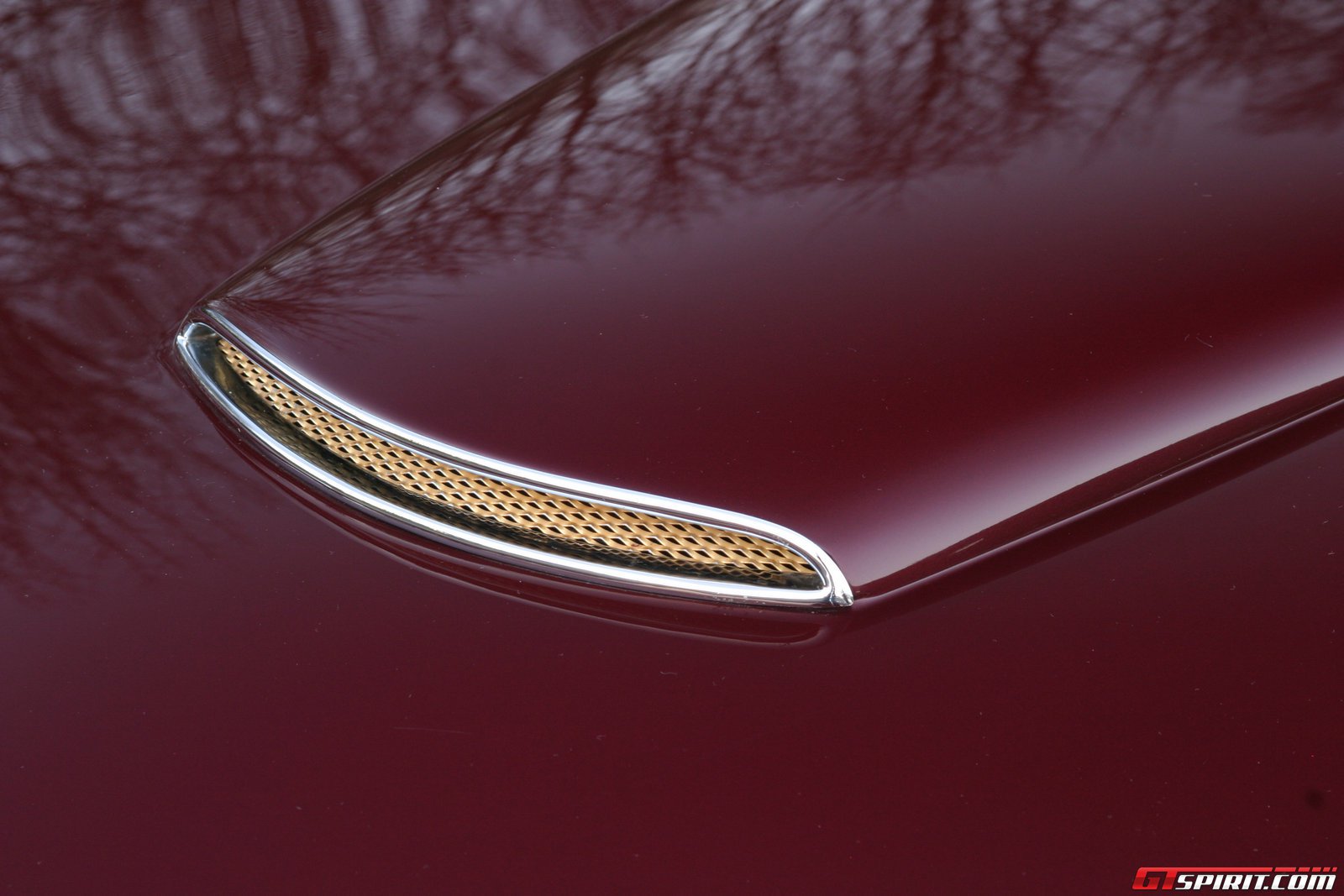
Overlaid on this masterful shape is some quite exquisite detailing of the kind you will never find on a mass produced car. From the neat three-piece chromed front bumpers and the handcrafted air intake grille on the bonnet scoop to the chromed covers for the jacking points that celebrate rather than attempt to hide such a utilitarian function, the Lusso is a feast for the appreciative eye.
And then you open the bonnet. Nestled snugly in the middle of the engine bay is the fabulous Columbo-designed alloy-block, twin-cam, triple Weber-carburettor, 60-degree V12 with its black crackle painted cam covers. Known as the Type 168, this is essentially the same motor as installed in the road going 250GT SWB. Producing 240 bhp at 7,500rpm, it gave the Lusso an 8.0 sec 0-60mph time and a 150mph top speed.

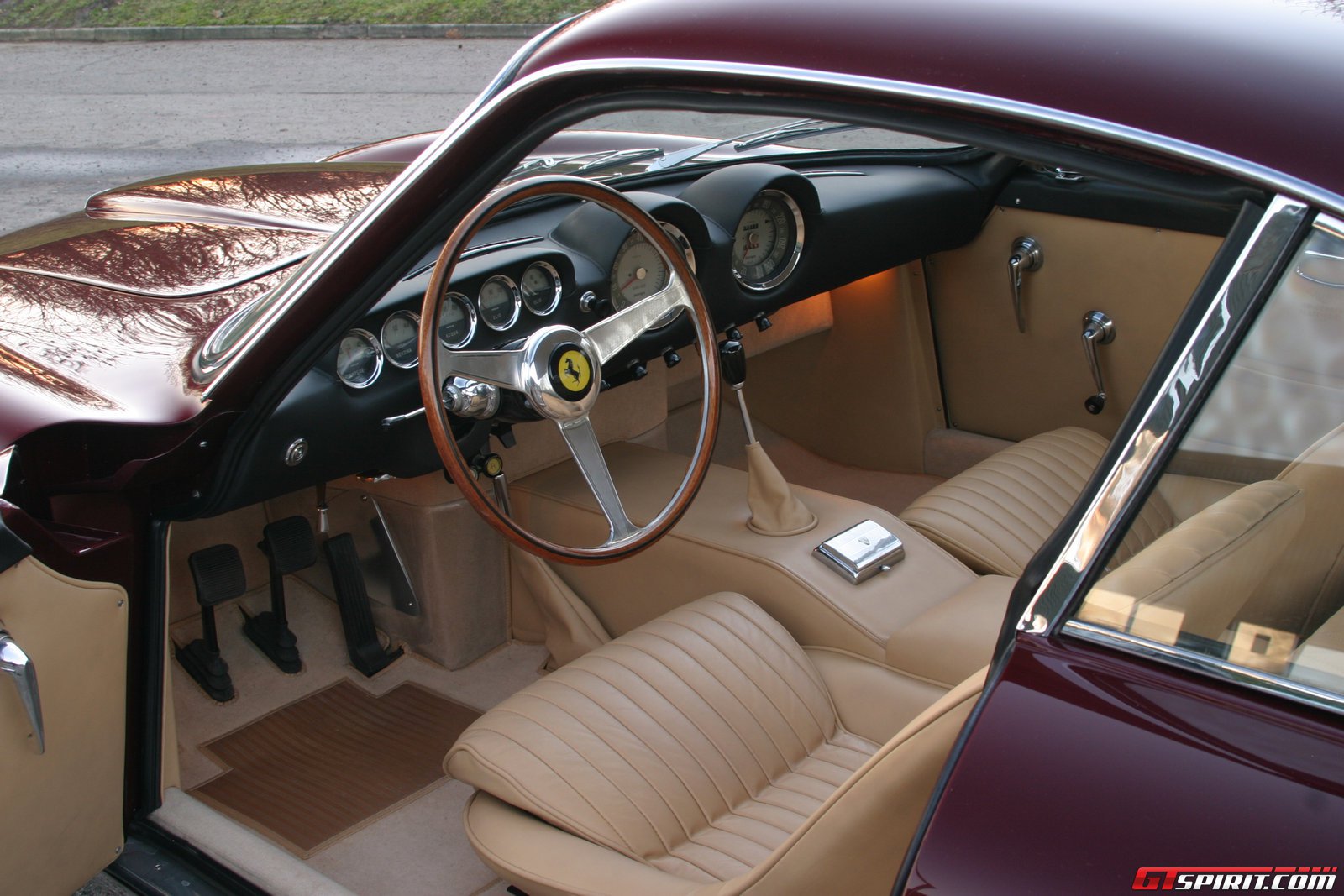
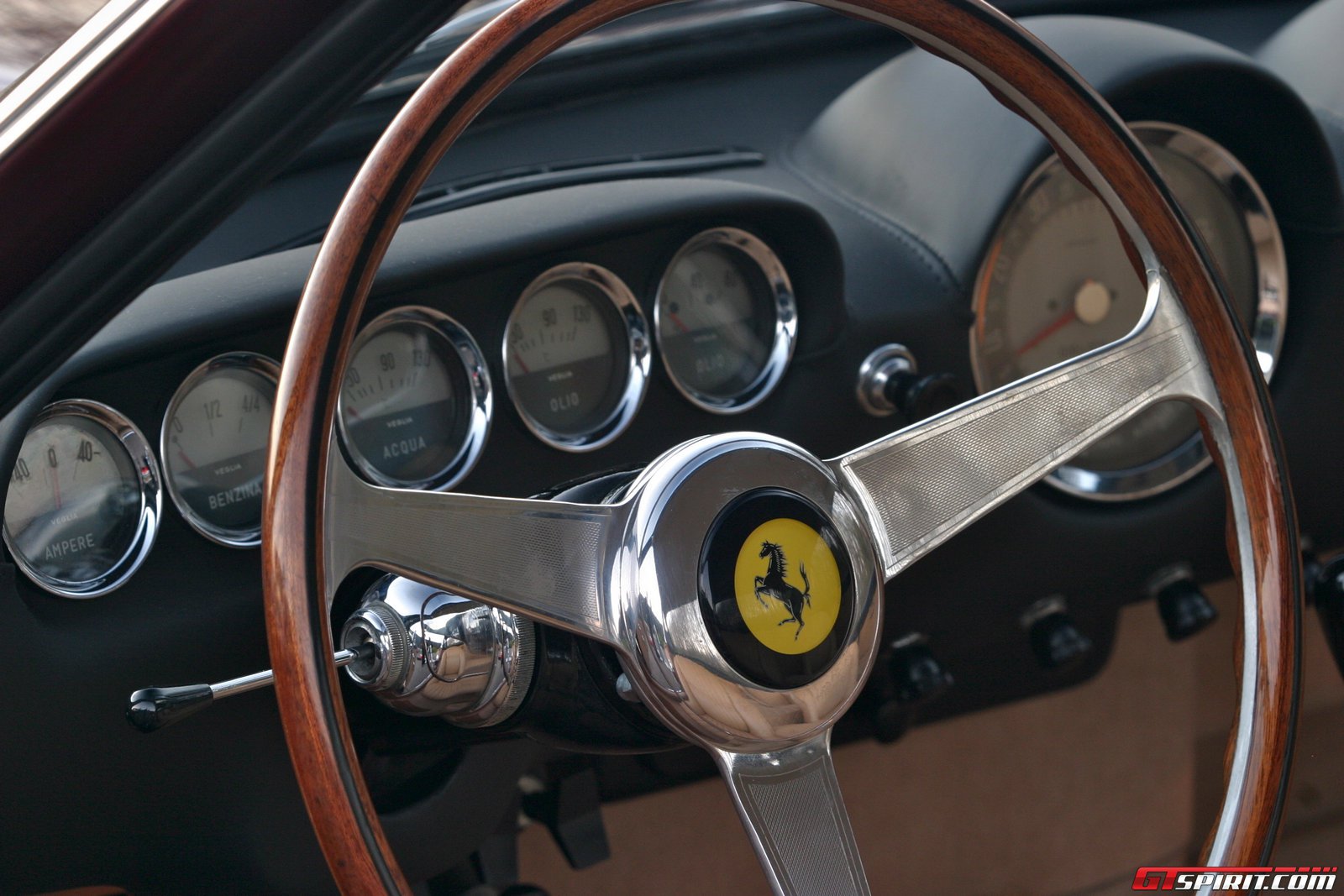
The interior is simple and functional in the typical Italian style of the era. But if there is one criticism of the car then it is the disposition of the instruments with the speedometer and rev counter offset to the centreline of the dashboard. It is a major distraction to look away from the road when you are driving quickly, and ironically, this triumph of style over practicality was repeated by BMW with their Z8 roadster in 2000.
That apart, the detailing in the cabin is quite delightful. Every individual item from the elegant wood-rimmed steering wheel to the chromed hinges of the sun visors has been thoughtfully designed and crafted.
For people used to modern cars with their power assisted controls, a drive in a car from this period can come as either a rude shock or a breath of fresh air depending on your perspective.

The 250 Lusso falls into the latter category and genuinely surprises you at how ‘modern’ it feels, even on pockmarked English country roads. This is particularly so with respect to the ride, which is taut in a sporting GT way, yet very comfortable thanks to well chosen spring and damper rates and relatively long wheel travel.
I have driven a number of Ferrari 250 cars including the redoubtable 250GT SWB, which is possessed of light and incredibly communicative steering, and a really delightful four-speed gearbox. This car just begs to be drifted through the bends on a racetrack.
However, although these two Ferraris share many mechanical parts, they are actually quite different to drive. The Lusso has a fine tiller too, but one that feels a bit heavier and about 20 percent more insulated from the road.
The 250GT SWB I drove was Clive Beecham’s RHD car that Sir Stirling Moss used to win the 1962 Tourist Trophy, and it had a really slick gearbox. Although it uses the same gearbox, the ratios of this LHD Lusso’s gearbox do not seem willing to slot in quite so easily.
Then in a flash I realised what was happening. The race-bred 250GT SWB comes with a perfectly sized alloy ball gearknob, whereas the road-going Lusso’s equally long lever is capped by a tall, thin black plastic knob.

A round knob allows perfect operation from any angle, which is an important trait in the cut and thrust of motorsport. The plastic designer knob on the other hand, despite its thoughtful moulded finger-shaped indents, forces your hand and wrist muscles to adopt a comparatively tense position, making it harder to negotiate the spring-loaded gate as instinctively. When will stylists ever learn about simple ergonomics? Co-incidentally, some photos of Lusso interiors show cars with the alloy knob from the 250GT SWB, and it is likely that individual owners changed the knob.
When I had become familiar enough with the car to begin pushing it along briskly, it rose to the occasion, showing off a lovely poise and fluidity through fast sweeping turns.
The other pleasant surprise was the strong and responsive servo-assisted disc brakes, which felt well up to the car’s performance, even by today’s standards. In that respect, the Lusso is a very well balanced car compared to the heavier and more powerful Daytona I once owned, which had blinding straight-line performance without quite the brakes to match.
The only area where the Lusso requires a deeper well of situational awareness than is possessed by today’s average driver is in the area of low speed tractability.
Unlike the 4.4 litre four-cam Daytona, which has stump-pulling low speed torque and will happy pull third gear around town, the Lusso’s 3.0 litre V12 simply runs out of answers below 1,500rpm in a high gear and fluffs badly. Thus, when negotiating slow turns or T-junctions, use of second and sometimes even first gear is mandatory.

Once on cam however, the free-revving V12 is simply magnificent, the sound of its triple carbs overlaying the distinctive thrash of the timing chains and the bark of the twin exhausts. Life near the top end of the rev counter is what this engine was designed for!
It is always hard to get a true picture of what a classic was like when new since there are so many ropey cars around. The Lusso is no exception, and a car that did not benefit from the right expertise when rebuilt cannot give you a true picture of what this car is really about.
This particular car, Chassis No. 4411GT, was properly restored in 2003 at the behest of John Mayston-Taylor, knowledgeable car enthusiast, successful race driver and owner of Lynx Motors International. Through meticulous attention to detail, it probably drives as well, if not better, than any factory fresh Lusso ever did.
Despite the bumpy country roads that made up the bulk of our test drive, the car did not exhibit a single squeak or rattle, feeling as tight as the proverbial drum. In fact, it was hard to come to terms with the fact that we were driving a 40-year-old car!

4411GT is an early Lusso, 28th of the 350 built between 1962 and 1964, of which just 23 were RHD. The first and last production Lussos were 4103GT and 5955GT respectively. When you consider that the Pininfarina prototype was Chassis No. 3849GT and the Scaglietti prototype bore the Chassis No. 4053, it is apparent that the production numbers did not run sequentially!
Classic Ferraris often had interesting owners. The Superfast can count Peter Sellers and The Aga Khan amongst its owners, and some lucky Lusso owners might discover that James Coburn, Steve McQueen or some other famous personality were past custodians of their cars.
4411GT was first registered on 17th May 1963, having been originally commissioned for the French film actress Mylene Demongeot, whose beauty was on a par with Brigitte Bardot. In fact, she acted alongside BB in the film ‘Futures Vedettes’ and co-starred in other significant period films alongside Alain Delon, Jean-Paul Belmondo and even Roger Moore, whose career had not taken off at that point.
For whatever reason, Demongeot did not take delivery of the Lusso and its first owner was Clemente Setbon, who used it regularly both in Paris and to commute to his second home in Menton, near Monaco where he is now retired. In fact, he did this for around 20 years before putting the Lusso into storage in his underground garage in Paris.

Bugatti Opens Dealership in Hong Kong


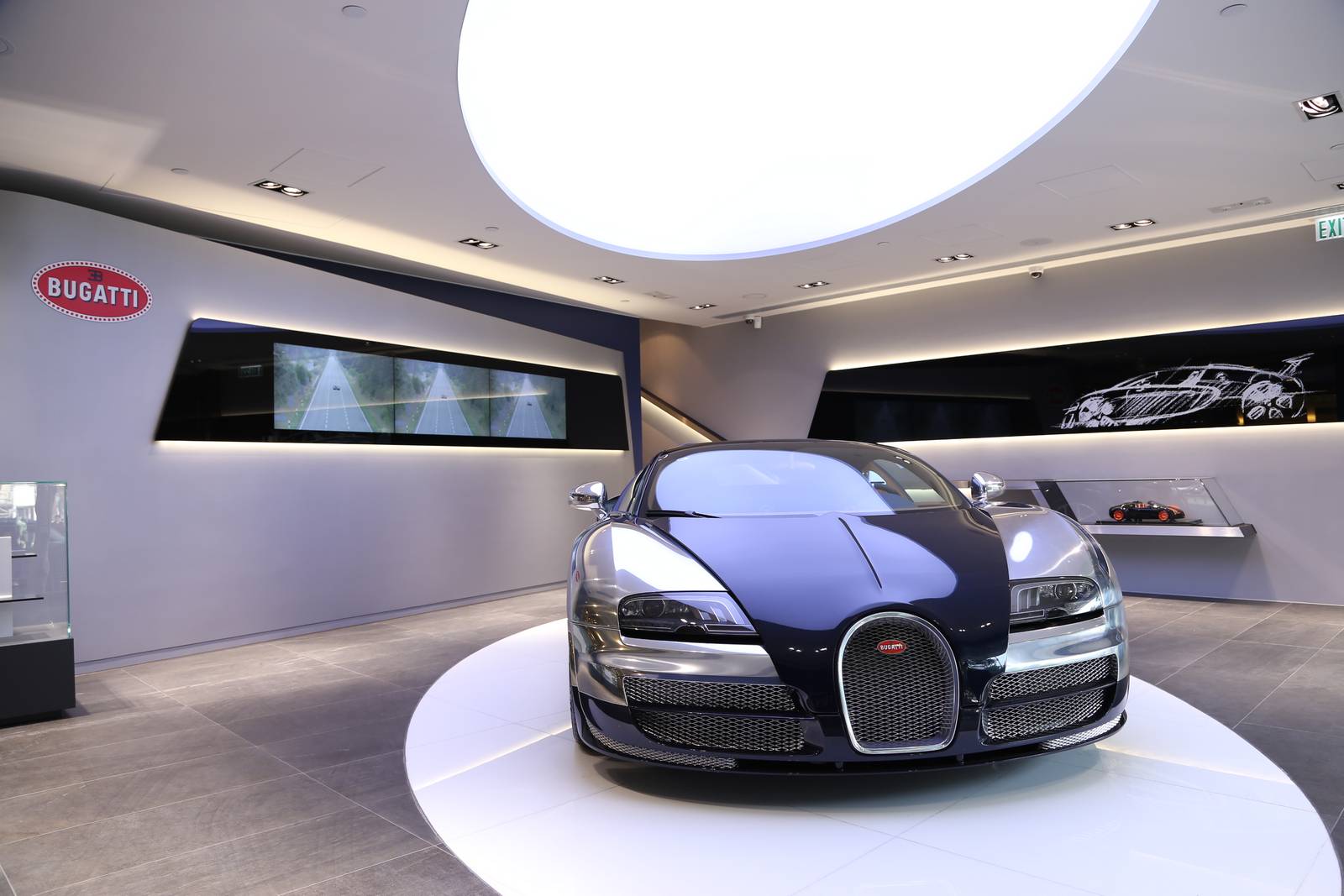
Considering the wealth present in Hong Kong and the popularity of supercars there, it was only a matter of time before Bugatti opened a dealership there, and that is exactly what they did a couple of days ago. This new Bugatti Hong Kong dealership will act as the flagship outlet for the Far East and Asia-Pacific region.
Located in the heart of the financial and business district of Hong Kong, the new Bugatti showroom covers two floors. The first floor is an 80 square meter exhibition area encapsulated with a curved glass fascia inviting stunned onlookers in. The second 90 square meter level includes a customer lounge and configuration area where prospective Bugatti Veyron owners can choose from an array of options for their Veyron Grand Sport (the only Veyron model still on sale).
When discussing the opening, member of the board of Bugatti Automobiles S.A.S and in charge of Sales, Marketing and Customer Service Dr. Stefan Brungs said, “Hong Kong is an important location for Bugatti. The new showroom gives us the opportunity to even better look after our customers, and in a more personal way. Our partner Mileson Guo has created a true jewelry box which is the perfect stage for our luxury brand. We very much thank Mr Guo for his commitment and look forward to the collaboration with him and his team.”

Owner and General Manager of Bugatti Hong Kong Mileson Guo then said, “A Bugatti is a moving piece of art. It is a privilege to become a distributor of this fantastic brand. I am very honored to bring Bugatti to Hong Kong, to share the passion of Bugatti in Asia Pacific.”

Bugatti Opens New Showroom in Qatar


Bugatti Opens New Showroom in Qatar
Bugatti have opened their fourth showroom in the Middle East. The producers of the worlds fastest car (officially) celebrated the opening of the 30th showroom that opened its doors last week in Qatar. Qatar is the 19th market in which the marque, which is part of the Volkswagen Audi Group, operates within.
The facility will be run in collaboration with partnership dealer Al Wajba Motors. Qatar and the United Arab Emirates have proved to be one of the strongest markets for the Bugatti Veyron with a number of cars being sold to members of the Royal Family and globally recognized philanthropists.

الثلاثاء، 25 فبراير 2014

Bugatti Veyron number 400 is sold


Bugatti Veyron Super Sport


The French-based, Volkswagen-owned Bugatti marque has announced that it has sold the 400th example of the 12-cylinder, 200mph Veyron supercar, meaning that only 50 more will be built before production ceases.
The 400th Veyron is a Grand Sport Vitesse “Jean-Pierre Wimille”, the third and final example of this limited edition, itself a part of the six-part “Les Légendes de Bugatti” edition of cars. It has been bought by a customer in the Middle East at a cost of at €2.13 million (£1,781,250) excluding taxes and transport.
Since its launch in 2005, Bugatti has sold all the planned run of 300 coupés – the Veyron 16.4 with 1,001PS (987bhp) and the Veyron 16.4 Super Sport with 1,200 PS (1,183bhp). Now 100 of the planned 150 roadsters - the Veyron 16.4 Grand Sport with 1,001 PS and the Veyron 16.4 Grand Sport Vitesse with 1,200 PS - have now been sold, leaving just 50 models left to buy.
The six-part “Les Légendes de Bugatti” series was launched in August 2013 at California’s Pebble Beach concours d’elegance with the Vitesse “Jean-Pierre Wimille”. This was followed by the Legend car, “Jean Bugatti”, which was presented at the Frankfurt motor show.
In November the third Legend Edition, dedicated to Meo Costantini, was revealed in Dubai. As with all Bugatti Legend cars, the production run is limited to three vehicles.

Bugatti Veyron stripped of its fastest car title

Bugatti Veyron Super Sport
The Bugatti Veyron Super Sport has been stripped of its title as the world's fastest road-legal car after it emerged that a speed limiter was switched off during tests.
Bugatti was awarded the title in 2010 when test driver Pierre-Henri Raphanel hit 268mph (431kmh) in a Veyron Super Sport.
The firm went on to sell 30 of the £2.1 million models, but the top speed of the production car was limited to 258mph to protect its tyres.
Rules set out by Guinness World Records insist that, for the title to stand, all cars sold should be mechanically identical to the record breaker.
The car has now been stripped of its record adter the website driving.co.uk queried whether the production version should have a limited top speed.