


إظهار الرسائل ذات التسميات Ferrari. إظهار كافة الرسائل
إظهار الرسائل ذات التسميات Ferrari. إظهار كافة الرسائل
الخميس، 27 فبراير 2014
Ferrari achieved record profits


Road Test: 1963 Ferrari 250 GT Lusso
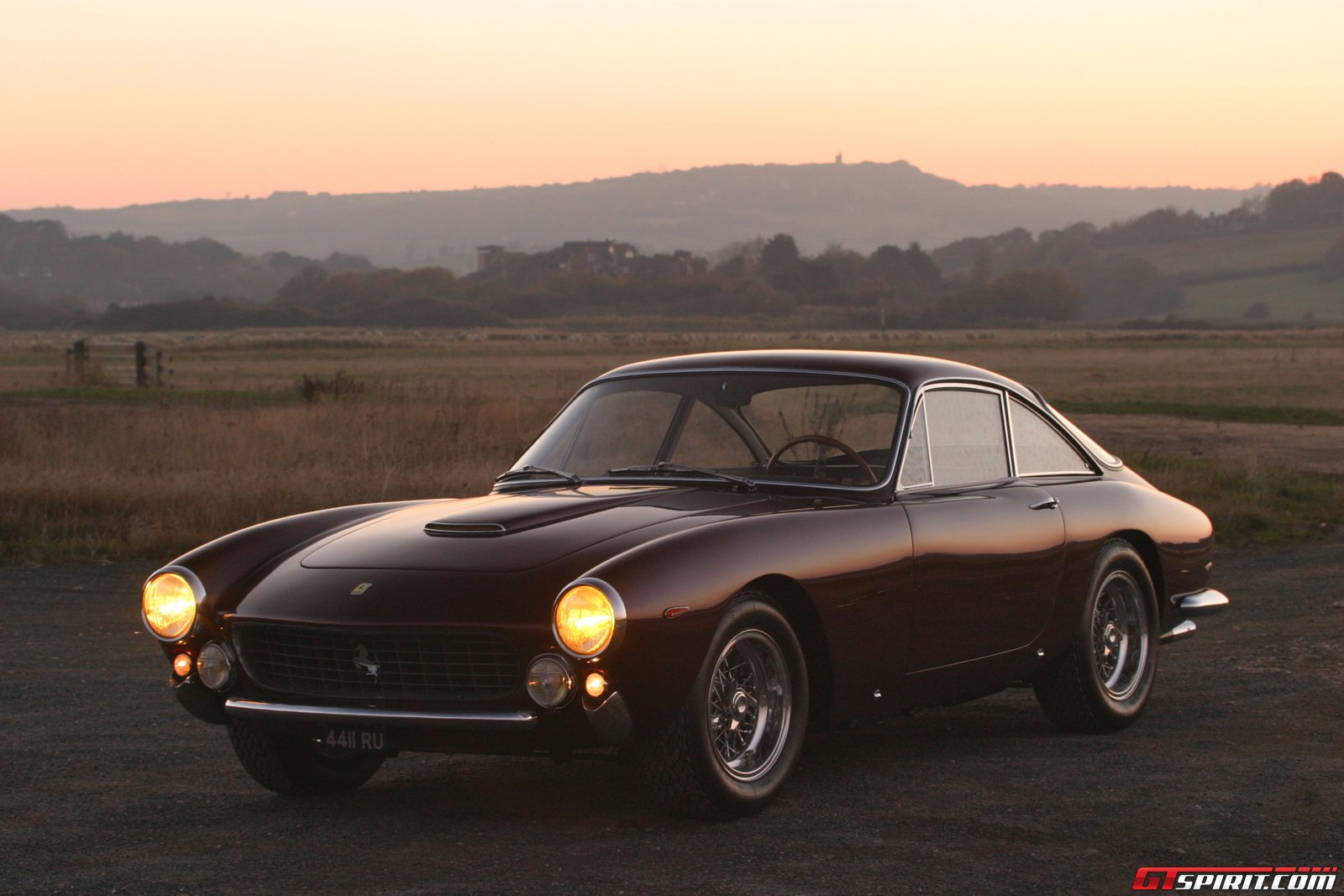
In the early 1960s, while the Beatles and Cliff Richard were topping the charts in Britain, and Elvis was threatening to become America’s best-known export, Ferrari were crafting some of the most beautiful cars ever to turn a wheel.
The Ferrari 250 came in many guises and became the generic term for a whole range of Ferrari Grand Touring cars. With 15 different models spanning the years 1953 to 1963, the 250 Series encompassed a decade of elegant sports cars designed for both road and track.
In a history spanning just over half a century, Ferrari has produced cars with a wide range of styling from beautiful and elegant to purposeful and even brutal. The most famous of the 250 series cars are undoubtedly the 250GT SWB and the incredible 250GTO, both racing legends and purposeful looking with it. But amongst the road cars the 250GT Lusso has the most beautiful lines of all, and is arguably the most elegant road going Ferrari of all time.
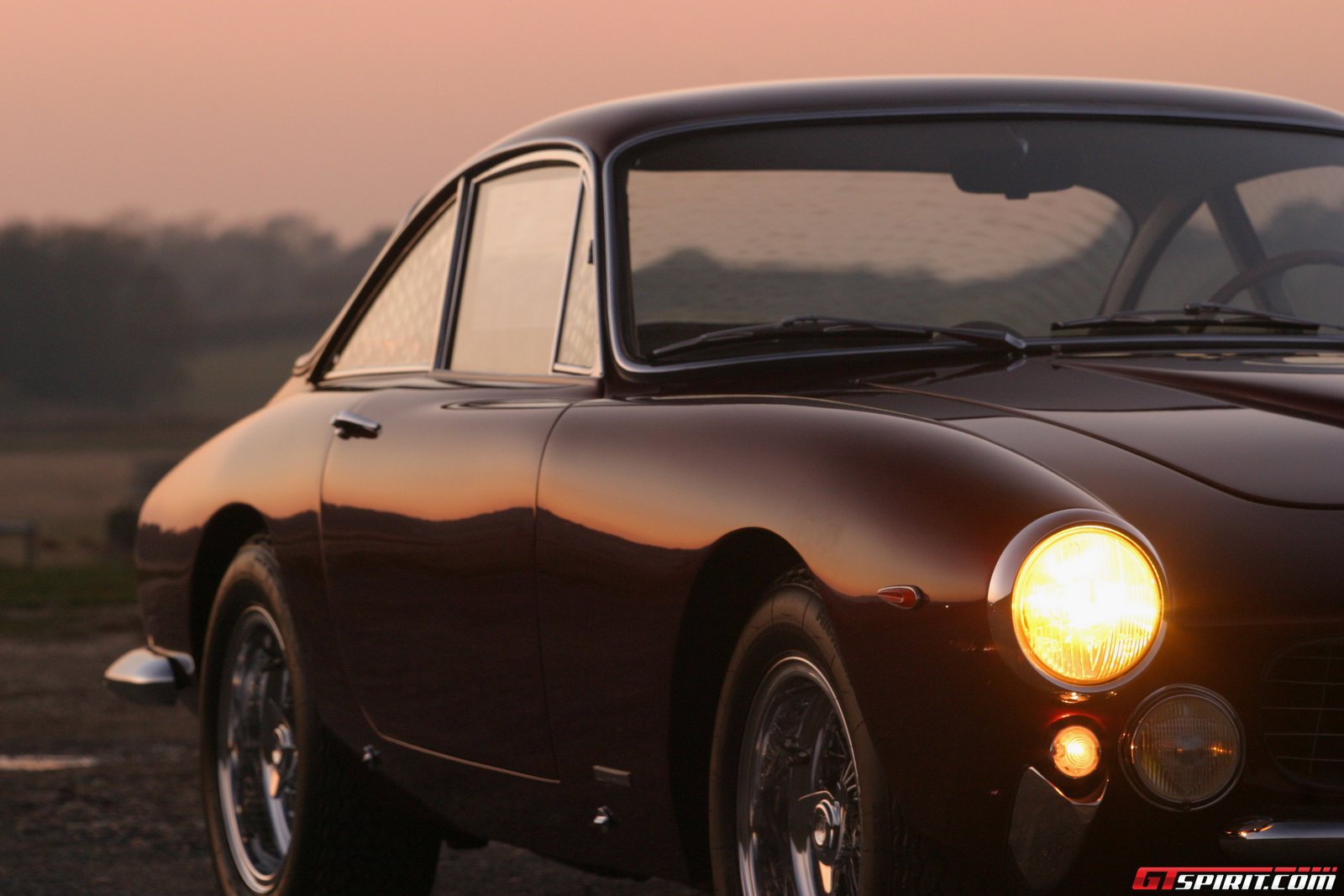
This is of course a subjective judgement, a gut reaction to a design that looks right from every angle. But in design, what looks right normally is, and when you stand back and consider the Lusso’s styling objectively, it becomes apparent that its basic proportions obey all the fundamental rules of good design.
At the core of this ‘rightness’ in proportion is the long front, which conveys a sense of power and speed, while the rear tapers to a Kamm tail, the aerodynamically most efficient way to finish a car. In between, the proportion of roof to body and its shape and position in relation to the wheelbase is also visual perfection.
The slim roof pillars and glasshouse create a feeling of light and space both inside and out, resulting in a car that appears powerful yet graceful. This is exactly the sort of look that made the Superm
If the Lusso looks like a simple shape at first glance, the way its body panels are formed in 3D belies that simplicity. The wings and door panels feature complex compound curves, a panel beaters nightmare, and in plan view, the Lusso tapers gently towards each extremity. If it were a living, breathing thing, it would surely be a dolphin!
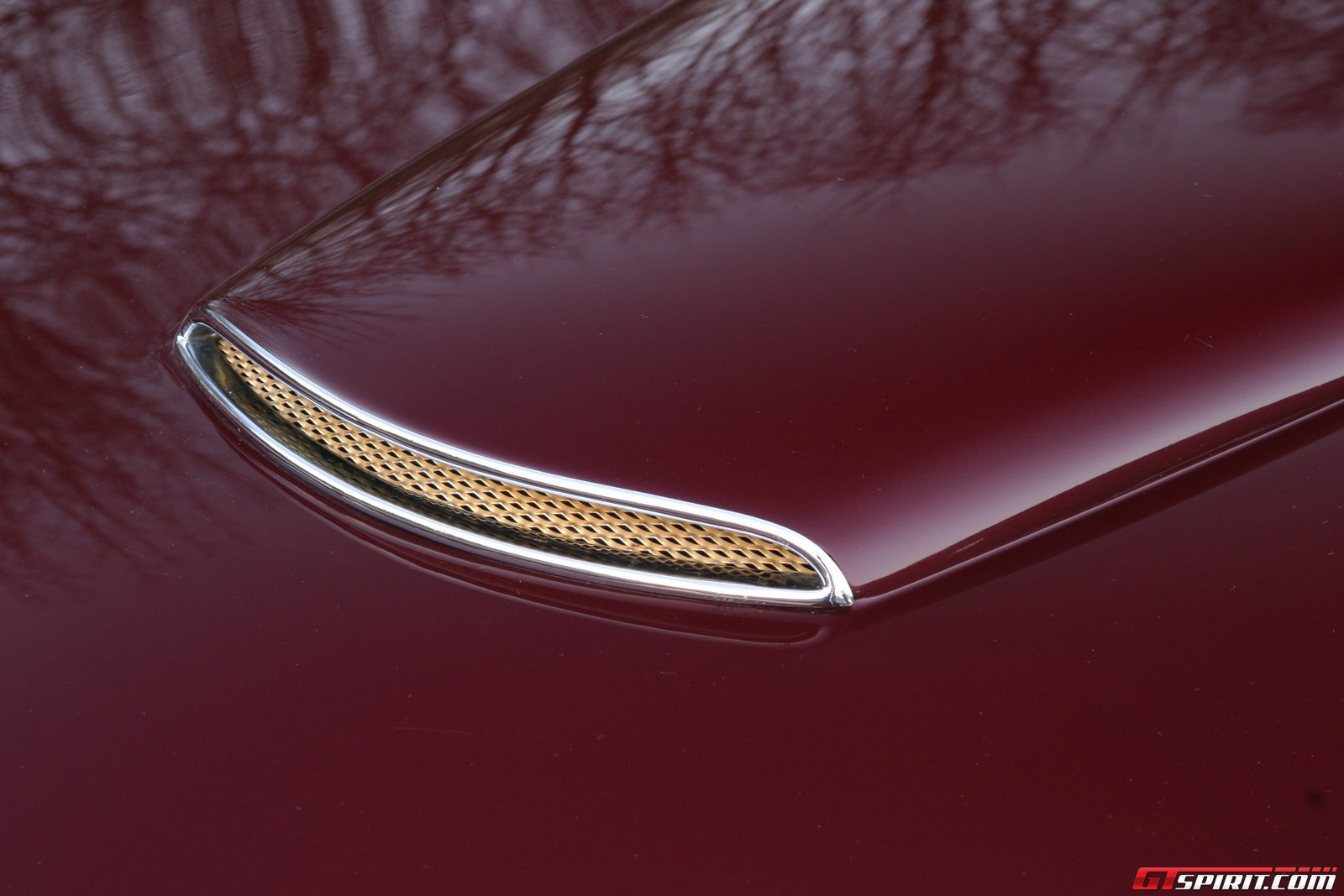
Overlaid on this masterful shape is some quite exquisite detailing of the kind you will never find on a mass produced car. From the neat three-piece chromed front bumpers and the handcrafted air intake grille on the bonnet scoop to the chromed covers for the jacking points that celebrate rather than attempt to hide such a utilitarian function, the Lusso is a feast for the appreciative eye.
And then you open the bonnet. Nestled snugly in the middle of the engine bay is the fabulous Columbo-designed alloy-block, twin-cam, triple Weber-carburettor, 60-degree V12 with its black crackle painted cam covers. Known as the Type 168, this is essentially the same motor as installed in the road going 250GT SWB. Producing 240 bhp at 7,500rpm, it gave the Lusso an 8.0 sec 0-60mph time and a 150mph top speed.
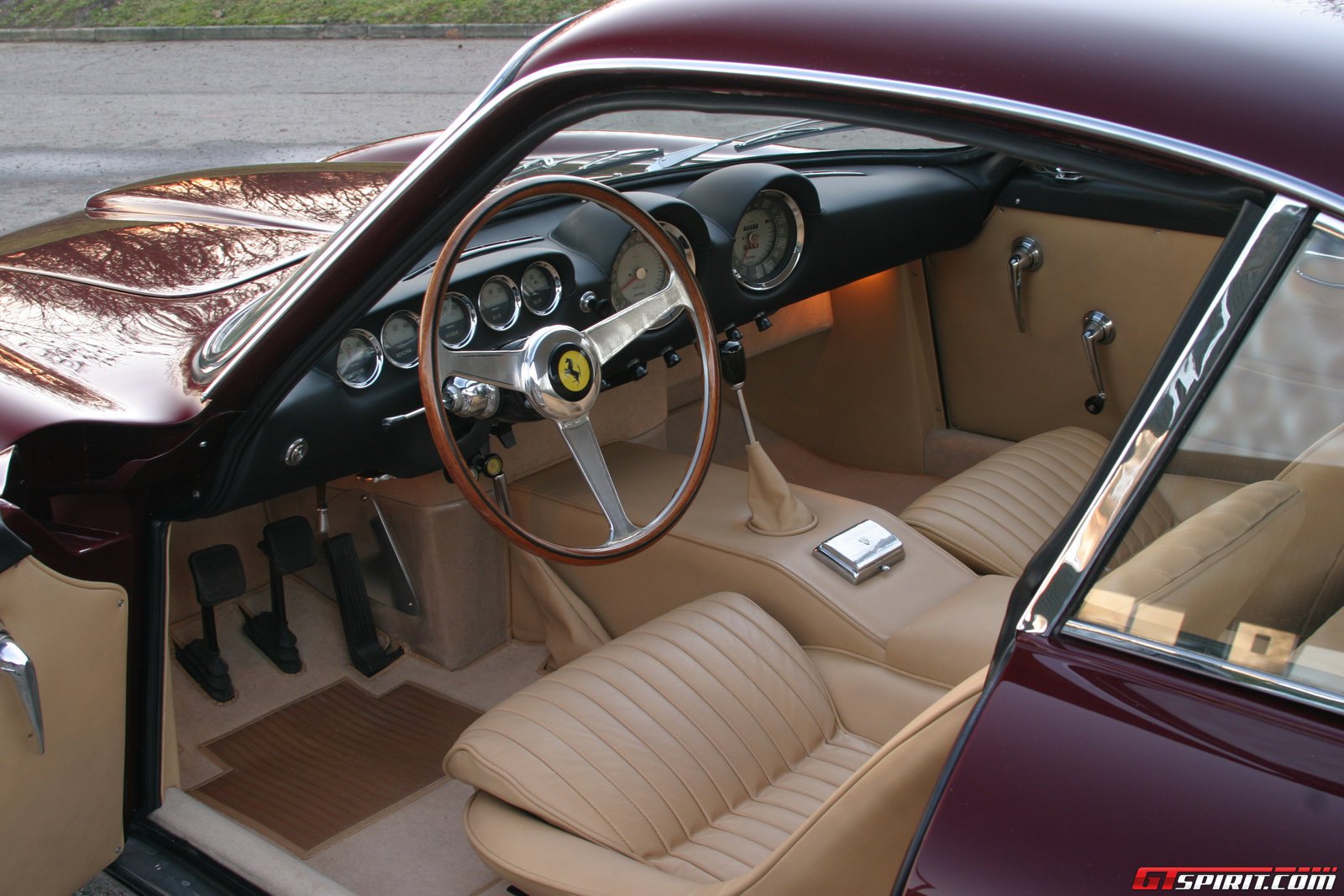
The interior is simple and functional in the typical Italian style of the era. But if there is one criticism of the car then it is the disposition of the instruments with the speedometer and rev counter offset to the centreline of the dashboard. It is a major distraction to look away from the road when you are driving quickly, and ironically, this triumph of style over practicality was repeated by BMW with their Z8 roadster in 2000.
That apart, the detailing in the cabin is quite delightful. Every individual item from the elegant wood-rimmed steering wheel to the chromed hinges of the sun visors has been thoughtfully designed and crafted.
For people used to modern cars with their power assisted controls, a drive in a car from this period can come as either a rude shock or a breath of fresh air depending on your perspective.
The 250 Lusso falls into the latter category and genuinely surprises you at how ‘modern’ it feels, even on pockmarked English country roads. This is particularly so with respect to the ride, which is taut in a sporting GT way, yet very comfortable thanks to well chosen spring and damper rates and relatively long wheel travel.
I have driven a number of Ferrari 250 cars including the redoubtable 250GT SWB, which is possessed of light and incredibly communicative steering, and a really delightful four-speed gearbox. This car just begs to be drifted through the bends on a racetrack.
However, although these two Ferraris share many mechanical parts, they are actually quite different to drive. The Lusso has a fine tiller too, but one that feels a bit heavier and about 20 percent more insulated from the road.
The 250GT SWB I drove was Clive Beecham’s RHD car that Sir Stirling Moss used to win the 1962 Tourist Trophy, and it had a really slick gearbox. Although it uses the same gearbox, the ratios of this LHD Lusso’s gearbox do not seem willing to slot in quite so easily.
Then in a flash I realised what was happening. The race-bred 250GT SWB comes with a perfectly sized alloy ball gearknob, whereas the road-going Lusso’s equally long lever is capped by a tall, thin black plastic knob.
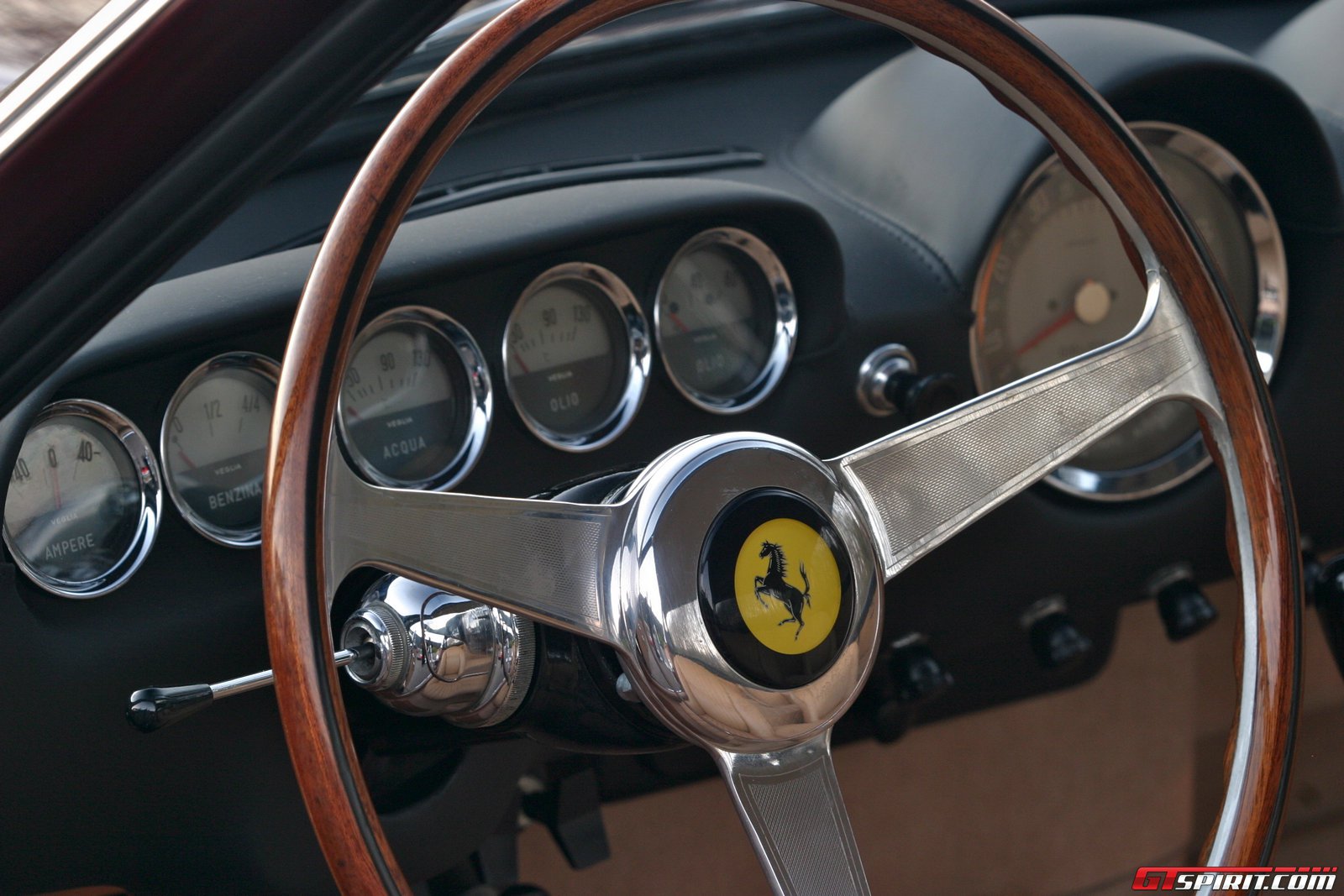
A round knob allows perfect operation from any angle, which is an important trait in the cut and thrust of motorsport. The plastic designer knob on the other hand, despite its thoughtful moulded finger-shaped indents, forces your hand and wrist muscles to adopt a comparatively tense position, making it harder to negotiate the spring-loaded gate as instinctively. When will stylists ever learn about simple ergonomics? Co-incidentally, some photos of Lusso interiors show cars with the alloy knob from the 250GT SWB, and it is likely that individual owners changed the knob.
When I had become familiar enough with the car to begin pushing it along briskly, it rose to the occasion, showing off a lovely poise and fluidity through fast sweeping turns.
The other pleasant surprise was the strong and responsive servo-assisted disc brakes, which felt well up to the car’s performance, even by today’s standards. In that respect, the Lusso is a very well balanced car compared to the heavier and more powerful Daytona I once owned, which had blinding straight-line performance without quite the brakes to match.
The only area where the Lusso requires a deeper well of situational awareness than is possessed by today’s average driver is in the area of low speed tractability.
Unlike the 4.4 litre four-cam Daytona, which has stump-pulling low speed torque and will happy pull third gear around town, the Lusso’s 3.0 litre V12 simply runs out of answers below 1,500rpm in a high gear and fluffs badly. Thus, when negotiating slow turns or T-junctions, use of second and sometimes even first gear is mandatory.

Once on cam however, the free-revving V12 is simply magnificent, the sound of its triple carbs overlaying the distinctive thrash of the timing chains and the bark of the twin exhausts. Life near the top end of the rev counter is what this engine was designed for!
It is always hard to get a true picture of what a classic was like when new since there are so many ropey cars around. The Lusso is no exception, and a car that did not benefit from the right expertise when rebuilt cannot give you a true picture of what this car is really about.
This particular car, Chassis No. 4411GT, was properly restored in 2003 at the behest of John Mayston-Taylor, knowledgeable car enthusiast, successful race driver and owner of Lynx Motors International. Through meticulous attention to detail, it probably drives as well, if not better, than any factory fresh Lusso ever did.
Despite the bumpy country roads that made up the bulk of our test drive, the car did not exhibit a single squeak or rattle, feeling as tight as the proverbial drum. In fact, it was hard to come to terms with the fact that we were driving a 40-year-old car!
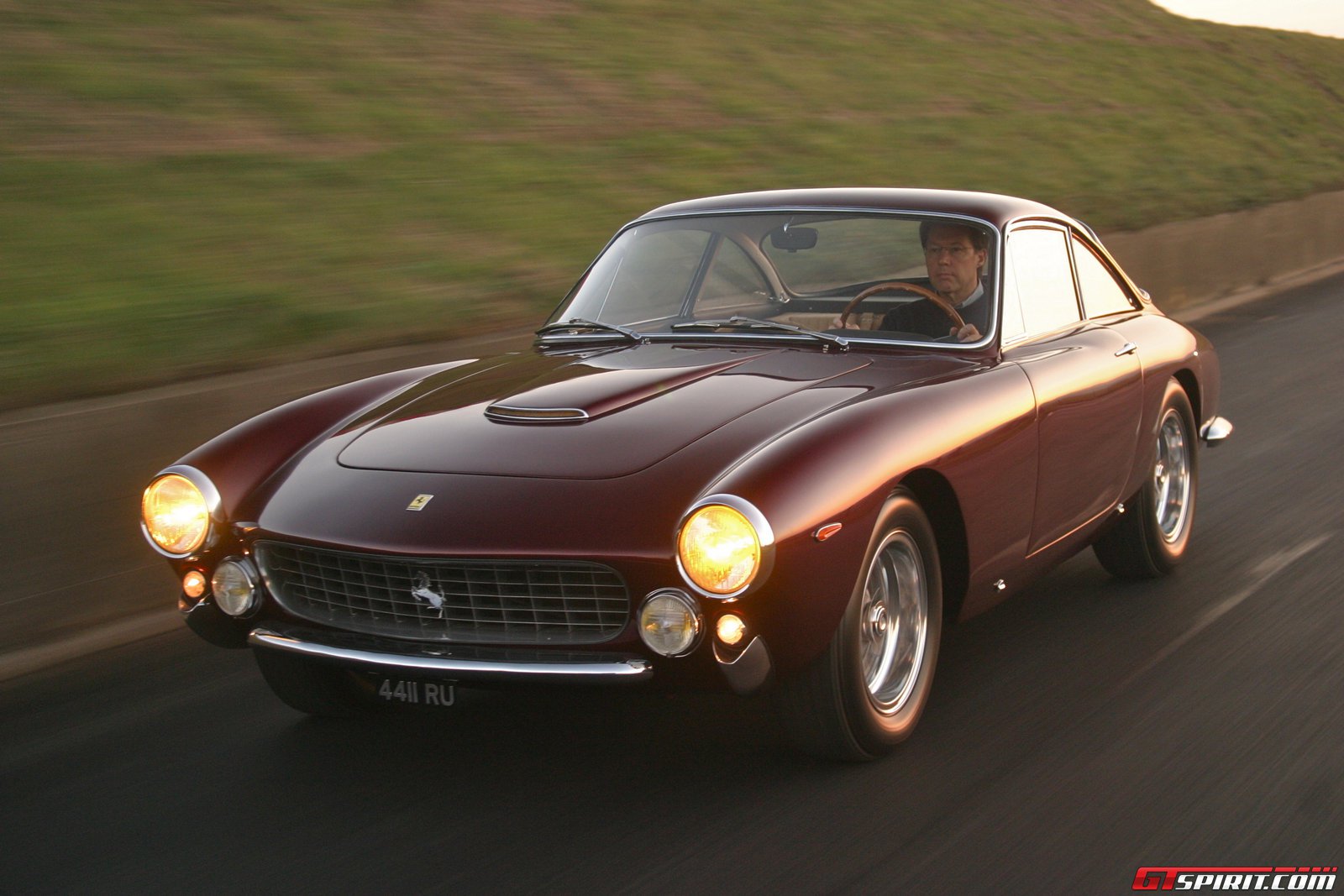
4411GT is an early Lusso, 28th of the 350 built between 1962 and 1964, of which just 23 were RHD. The first and last production Lussos were 4103GT and 5955GT respectively. When you consider that the Pininfarina prototype was Chassis No. 3849GT and the Scaglietti prototype bore the Chassis No. 4053, it is apparent that the production numbers did not run sequentially!
Classic Ferraris often had interesting owners. The Superfast can count Peter Sellers and The Aga Khan amongst its owners, and some lucky Lusso owners might discover that James Coburn, Steve McQueen or some other famous personality were past custodians of their cars.
4411GT was first registered on 17th May 1963, having been originally commissioned for the French film actress Mylene Demongeot, whose beauty was on a par with Brigitte Bardot. In fact, she acted alongside BB in the film ‘Futures Vedettes’ and co-starred in other significant period films alongside Alain Delon, Jean-Paul Belmondo and even Roger Moore, whose career had not taken off at that point.
For whatever reason, Demongeot did not take delivery of the Lusso and its first owner was Clemente Setbon, who used it regularly both in Paris and to commute to his second home in Menton, near Monaco where he is now retired. In fact, he did this for around 20 years before putting the Lusso into storage in his underground garage in Paris.
الثلاثاء، 25 فبراير 2014
Modena opens new Enzo Ferrari museum

The Enzo Ferrari Museum existed previously as two buildings, including Enzo's childhood home and his father's workshop, but the new building was created to display the Prancing Horse's full history. Projectors display images and films of Enzo's like across its walls and floors, and the cars on display represent Ferrari's most important as a driver and constructor over the past century.
The new gallery is meant to compliment the Museo Ferrari in nearby Maranello. Enzo's museum focuses squarely on Ferrari's past, and the other concentrates on brand's present and future, while still displaying some important classic models. Both will be open every day, expect for Christmas and the New Year.
According to the Enzo Museum's website, adult tickets cost 22 euros ($30), but a combined ticket for both
Ferrari posts record profits on restricted volume

Most automakers are after one thing and one thing only: selling more cars. Because, after all, selling more cars means making more money. Right? Well that's usually the case, but Ferrari has taken a different approach. Rather than try and sell more cars, Ferrari intentionally sold fewer models in 2013, yet it made more money.
The move was implemented after 2012 emerged as the strongest year in the company's history. Instead of pushing to sell even more cars, it opted to maintain a level of exclusivity by selling fewer – 5.4 percent fewer than the year before, to be specific – thereby ensuring that those it did sell were worth more. As a result, in 2013, Ferrari logged record turnover, profits and finances: on 2.3-billion euros of revenue (up 5 percent from the previous year), Ferrari recorded 363.5 million euros in profit last year – that's roughly $500M USD.
Before you go jumping to conclusions, though, bear a few factors in mind. For one, Ferrari's stakeholders aren't pocketing all that cash – they're reinvesting it into the company: over the course of the same year, Ferrari invested some 337 million euros – 464 million dollars – in research and development. And while the company's extensive merchandizing efforts continue to bring in more cash, at 54 million euros ($74M) raised last year, the branding operation still doesn't account for a sixth of overall revenues. Still, it's little wonder that the experts at Brand Finance have named Ferrari the world's most powerful brand for the second year running.
Don't worry about the shortage in supply affecting availability of Prancing Horses in America, either: the United States remains Ferrari's largest market by far, with 2,035 vehicles delivered last year – a 9-percent increase over the previous year. China remains the company's second-largest market with 700 deliveries, while Italy has, in the company's own words, "become a marginal market for the luxury car sector": last year, Ferrari sold just 205 cars in its home market, or barely more than a tenth of what it moves on our shores.
Ferrari' is an oft-banned search term in China, but why?

The Internet has been a boon for car enthusiasts; after all, information about any car ever made is available at a few taps of the keyboard, whenever you'd like. Unfortunately, some Chinese motor heads are not quite as lucky because state censors have been intermittently banning searches for Ferrari on the country's micro-blogging sites, according to Time.
The problem has nothing to do with Maranello's supercars; it's what they represent. The Prancing Horse has become the symbol for so-called "princelings," wealthy young Chinese who use their parents' privileges in the Communist elite to afford luxuries.
The first bout of censorship came in 2011 when the son of then-high-ranking politician Bo Xilai was spotted cruising around Beijing in a red Ferrari, a vehicle much more expensive than he should have been able to afford. It started trending on Chinese social media, and censors began blocking searches for Ferrari in the car's red color. The Italian brand was censored again briefly in 2012 when a Chinese investor crashed his Prancing Horse into two other cars in Singapore.
It happened again in 2012 when the son of a top Communist party official was killed when he crashed his black Ferrari in Beijing. The crash was barely covered in state media but became such a hot topic on social networks for Ferrari to be banned again.
There was another, fatal Ferrari crash in Beijing on February 13. As before, it trended on social media, but this time there was no censorship. Maybe Chinese Ferrari fans are finally free to search for Maranello's best
Bugatti Veyron: just 50 left

Bad news for the discerning billionaire desiring precisely 51
Veyrons to fill his or her very long, very expensive driveway: Bugatti
has announced it will build just 50 more Veyron convertibles before
putting the record-breaking hypercar to rest.
The 400th Veyron has just rolled off the Molsheim production line, a ‘Wimille edition' Grand Sport Vitesse, one of Bugatti's six-part ‘Legends' run.Since 2005, Bugatti has produced its full run of 300 Veyron coupes and, so far, 100 roadsters, which leaves just 50 drop-top Veyrons to come before one of the most significant chapters of automotive history closes.
Quite how Bugatti can follow the world's fastest car is as yet a mystery. With the future of the four-door Galibier still apparently up in the air, it's at this stage unclear whether the ultra-performance wing of VW will attempt to out-fast its own record breaker, or pursue a different avenue.
But for now, if you're in the market for a 1200bhp, million-quid, 254mph convertible, you'd better get a wriggle on: once the Veyron's gone, there's not much out there that'll fit the brief.
For the rest of us, the question remains: after Jean-Pierre Wimille, Jean Bugatti and Meo Costantini, who are the other three luminaries to be honoured in the ‘Les Legendes de Bugatti' run? Surely James May is in with a shot?
Popular Posts
-
The Mercedes-Benz trio of ’45′ cars completes itself with the Mercedes-Benz GLA 45 AMG. The tiny (by AMG standards) 2.0 litre en...
-
In the early 1960s, while the Beatles and Cliff Richard were topping the charts in Britain, and Elvis was threatening to become America’...
-
What is the fastest car in the world? Bugatti company failed initially because of certain war .. What is the name of this w...
-
While Rocket Bunny is more known for creating body kits for Toyotas and Nissans like this recent GT-R, the Japanese tuner recently to...


